
QUARTERLY
INVESTMENT OUTLOOK
Intelligence for Your Portfolios
|
| Internet safety and fraud reminder BNY has become aware of incidents in various parts of the Asia Pacific region involving unauthorized use of our brand names (e.g., BNY) and impersonation of BNY leadership or employees. These schemes often involve third parties offering financial services and requesting personal or banking information via social media platforms, messaging applications, emails, or phone calls. Please be advised that BNY and its affiliates do not solicit business or payments through these channels. These activities are not authorized, endorsed, or associated with BNY. |
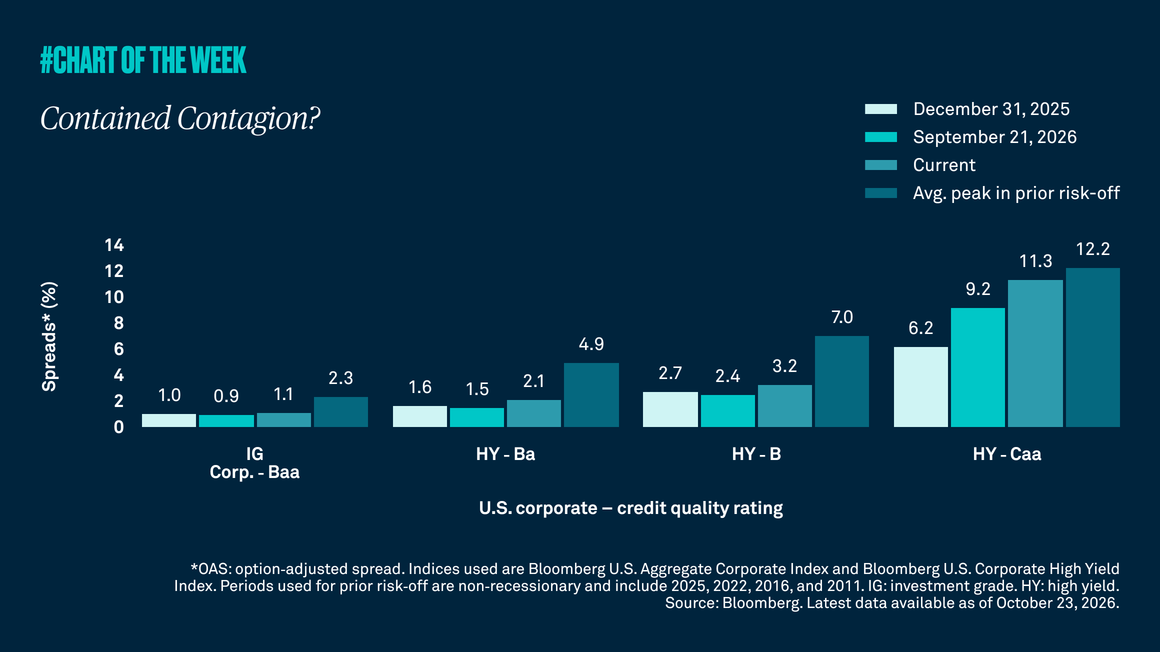
U.S. high yield credit spreads have widened year to date, reflecting greater investor caution about perceived default risk. The move also raises concerns about possible credit contagion. However, because spread widening has been concentrated in the lowest-quality issuers rather than higher-quality issuers, we don’t anticipate broader market stress.

Artificial intelligence (AI)-related funding needs are expected to support elevated credit issuance over the next few years. This may create potential investment opportunities but also material risks, reinforcing the importance of careful positioning and rigorous credit selection.

The S&P 500’s worst day and the best day that followed have something in common: you can’t predict either one. The table below underscores the risk of stepping out of the market during periods of heightened volatility. While selling after a sharp decline may feel like a way to avoid further losses, some of the market’s biggest gains have historically occurred soon after its biggest drops. For example, in 2020 and 2025, the S&P 500’s best day after the year’s worst came just six and three trading days later, respectively.

Change can be difficult to navigate, especially when its principal agent explicitly rejects prevailing norms. Less than five months into the job, Federal Reserve (the Fed) Chair Kevin Warsh has put investors in that position, which makes charting the course of monetary policy complicated.
CONTACT US | +65 6432 0222